Showing posts with label Naija recipes. Show all posts

Monday, 23 September 2019

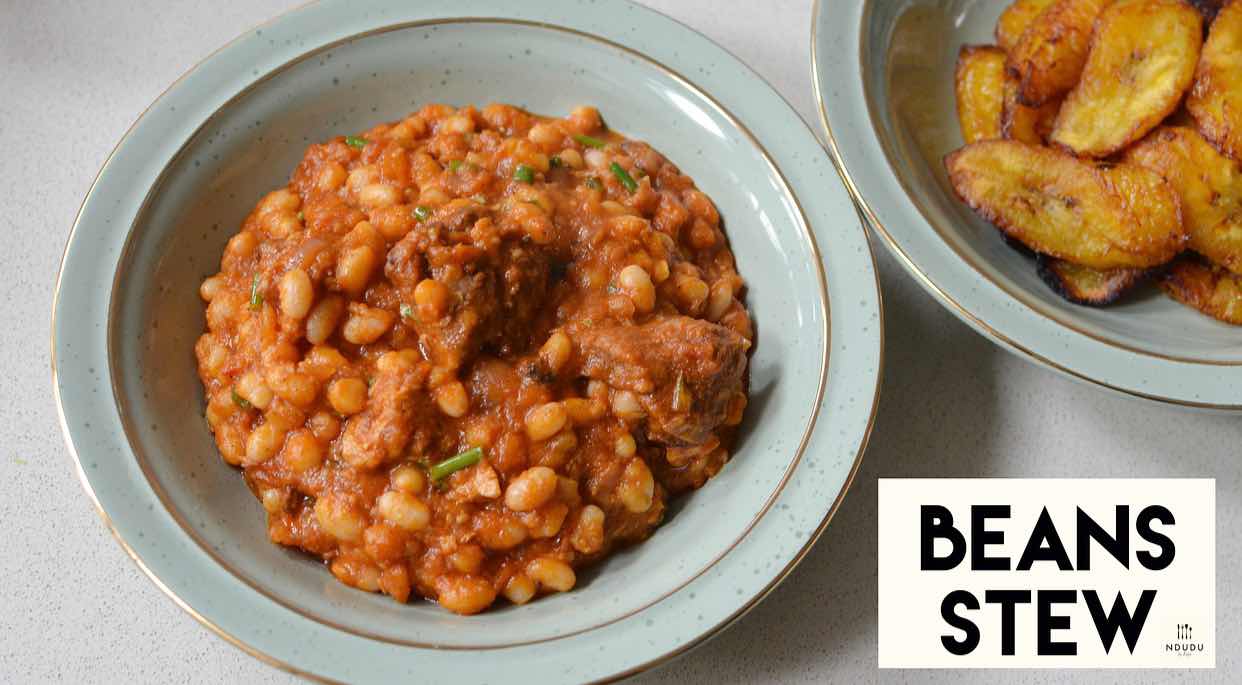
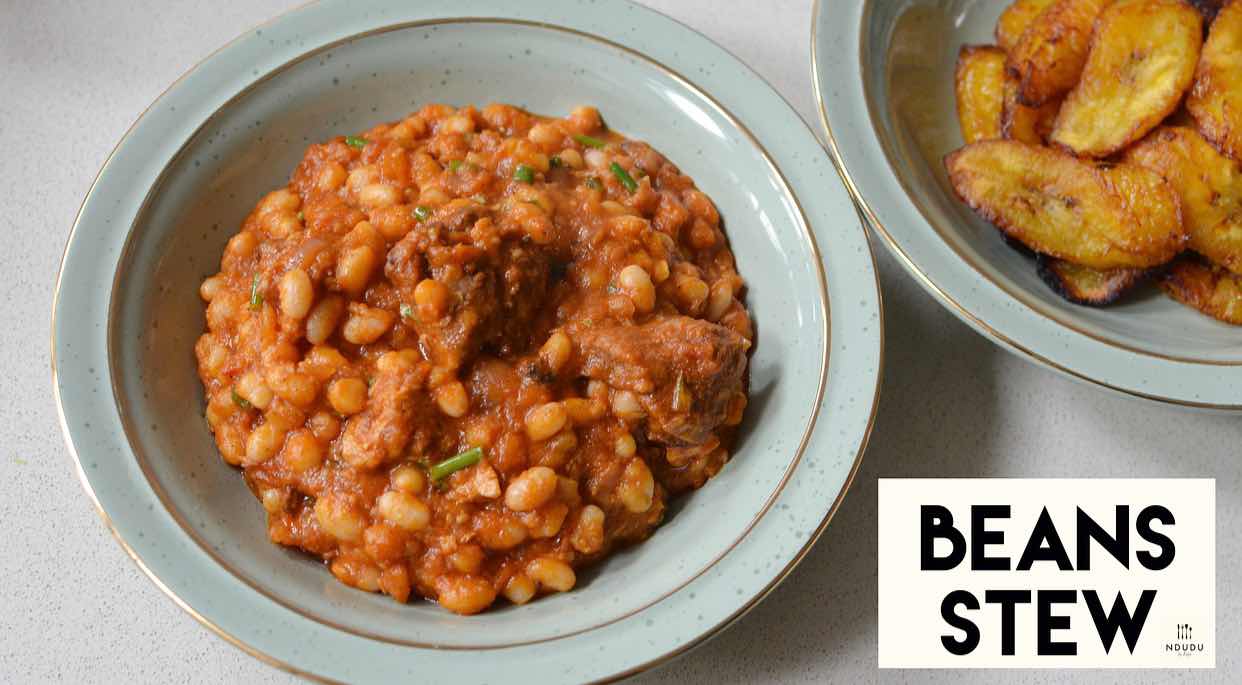
THE AMAZING SUYA BEANS RECIPE YOU MUST TRY


Just imagine the nutty and buttery texture of beans, mixed with that Umami flavoured salted beef, the fishy taste of Tuna with the hint of heat from the Cayenne pepper and that smoky nutty taste of your preferred charcoal grilled Suya all in a pot. Now imagine savouring all these flavours in this incredible beans stew recipe which pairs well with that caramelised sweet taste of fried ripened Plantain. Gosh! 


INGREDIENTS 
250g of Cannellini beans or Black eyed beans soaked at least for an hour
1.5 litres of water 
3 Bay leaves 
4 stalks of Grains of Selim (Hwentia)
3 dried red chillies 
6 tablespoonfuls of your preferred oil
1 large sliced Onions
1 diced salted beef
4 green chillies
2 tablespoonfuls of Tomato purée 
1 tablespoonful of Cayenne pepper 
200g of Passata or blended Tomatoes 
1 tinned Tuna
250g of Goat/Lamb/Beef char grilled Suya 
30g of chopped Spring Onions or Onion flowers
Salt to taste

SPICE BLEND
30g of Ginger
1 clove of Garlic
1 large Onion 
1 teaspoonful of Aniseed 
40g of dried Shrimp

Watch how to prepare this flavour packed stew below;


Don’t forget to subscribe, try the recipe and leave comments with your feedback. All photos, recipes and videos are by the owner of this blog.

Wednesday, 17 July 2019

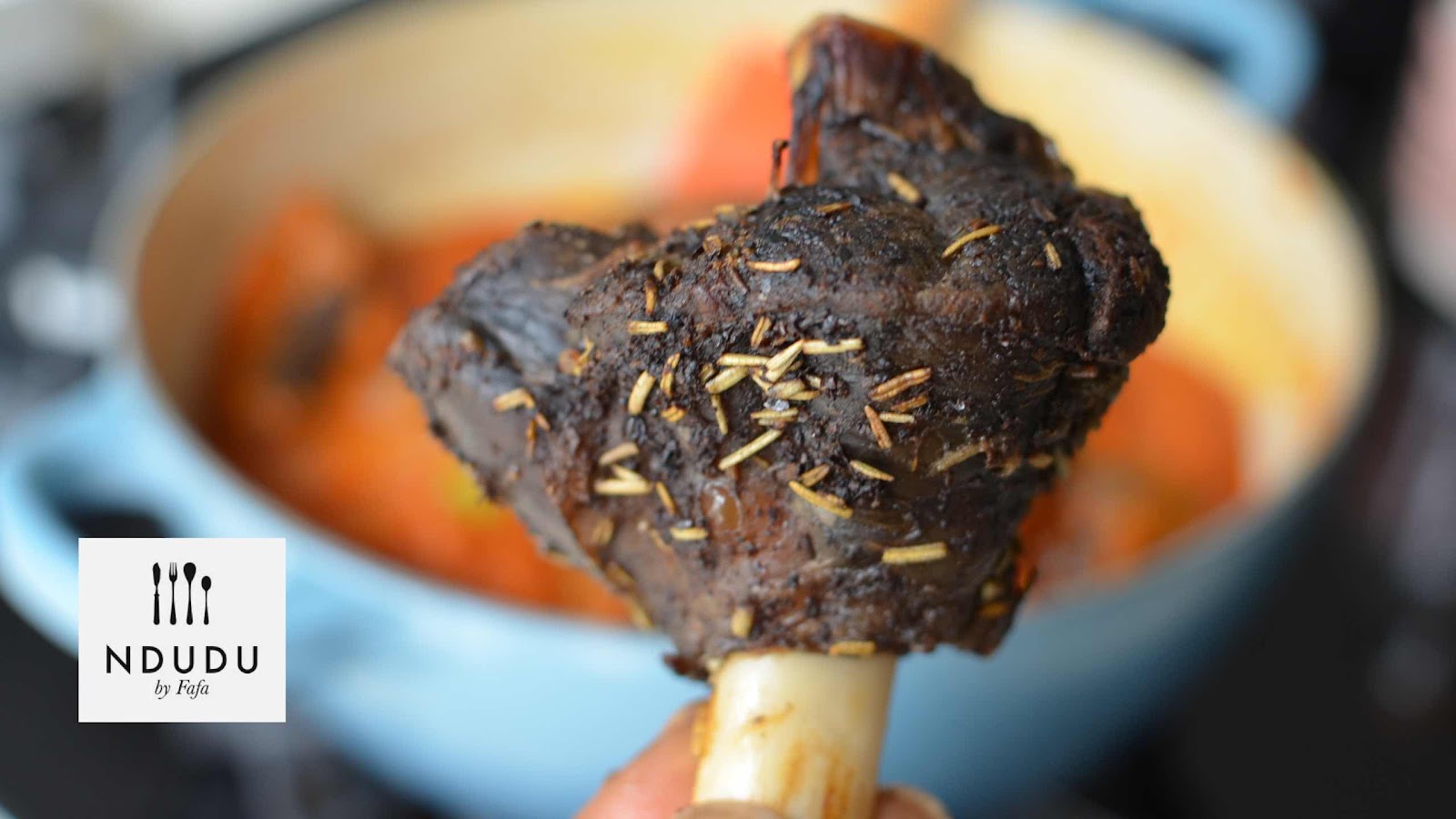
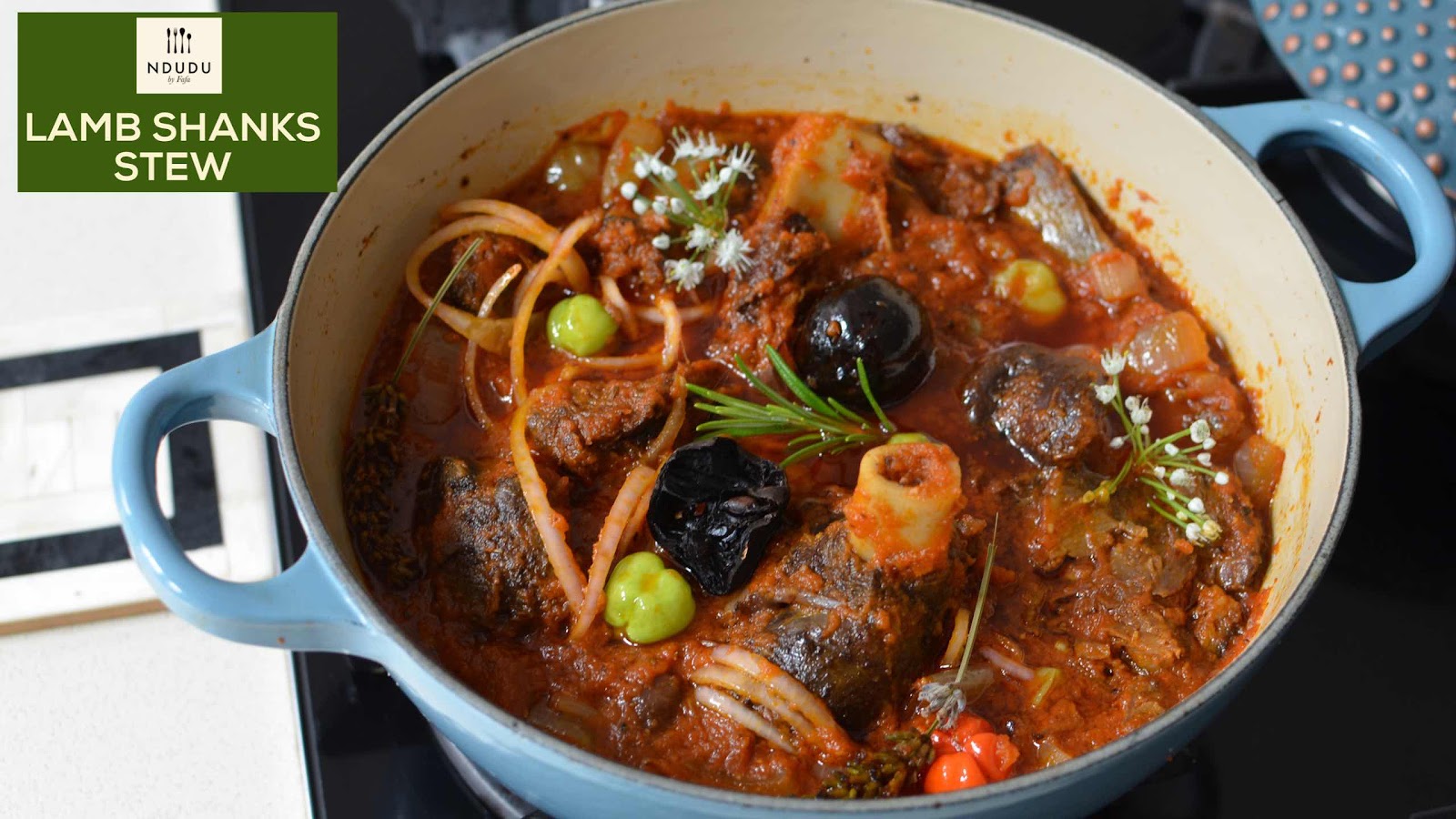
THE UNBELIEVABLY TASTY LAMB SHANK STEW RECIPE


In the second episode of the 3 part series of ‘How to create new flavours’, I have incorporated my perfectly spiced and infused aromatic Lamb shanks in this stew.
Personally this Lamb shank stew is the most challenging and equally fulfilling recipe I’ve created from scratch.
The first of its kind where I have balanced both a sour , aromatic and smoky flavour together. The challenge is in using the right ingredients for their natural flavours and quantity to achieve the perfect taste this stew required.
The main ingredient and challenge was including the Black Lime in a Tomato stew which increased the level of acidity already present (honestly I haven’t used the Black Lime before). You need to watch the recipe video to see how I ‘conquered’ the acidity and created a naturally flavour packed stew. 

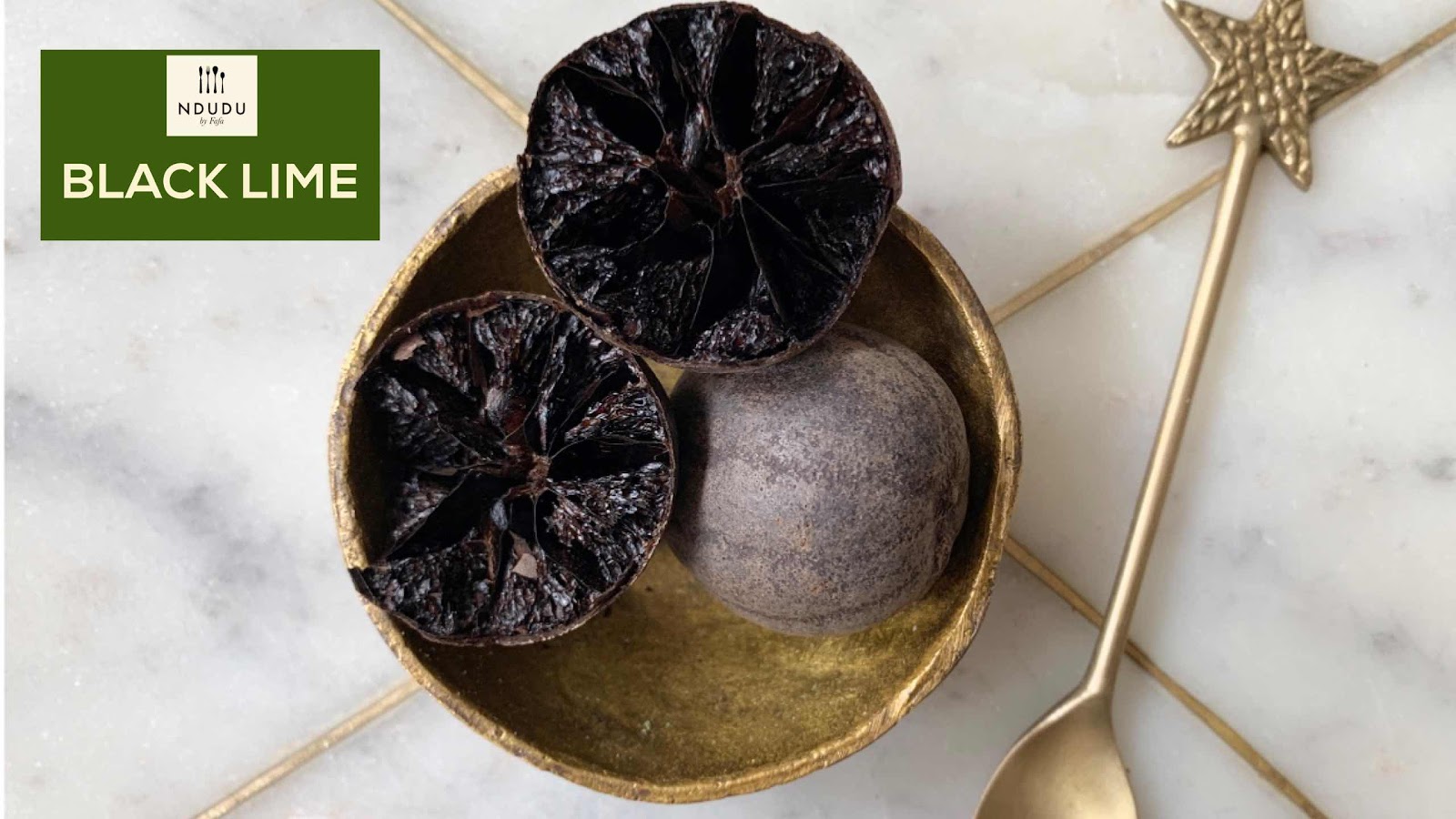
BLACK LIME


Black/Dried Lime is literally Lime dried in the sun which has lost all its water content.
The flavour has a slightly smoky taste inclusive of the natural Lime flavour, which is used in most Middle Eastern dishes. It’s readily available in specialist independent grocers, online and Waitrose. I can’t wait to create more recipes using the Black Lime. 


INGREDIENTS 
1kg of Lamb shanks/ Goat Meat/ Beef Short Ribs 
250g of Passata (Spiced and cooked down Tomato sauce)
2 large sliced Onions
10 Pettie Belle Chillies 
2 tablespoonfuls of Coconut oil
1 tablespoonful of salted Butter
1 tablespoonful of Tomato purée or paste
1 black Lime (readily available in Waitrose and online)
Salt to taste

METHOD 
Watch how to prepare this incredible stew below;


Don’t forget to subscribe, try the recipe, leave comments with your feedback and share.
All photos, recipes and videos are by the owner of this blog.


Wednesday, 26 June 2019

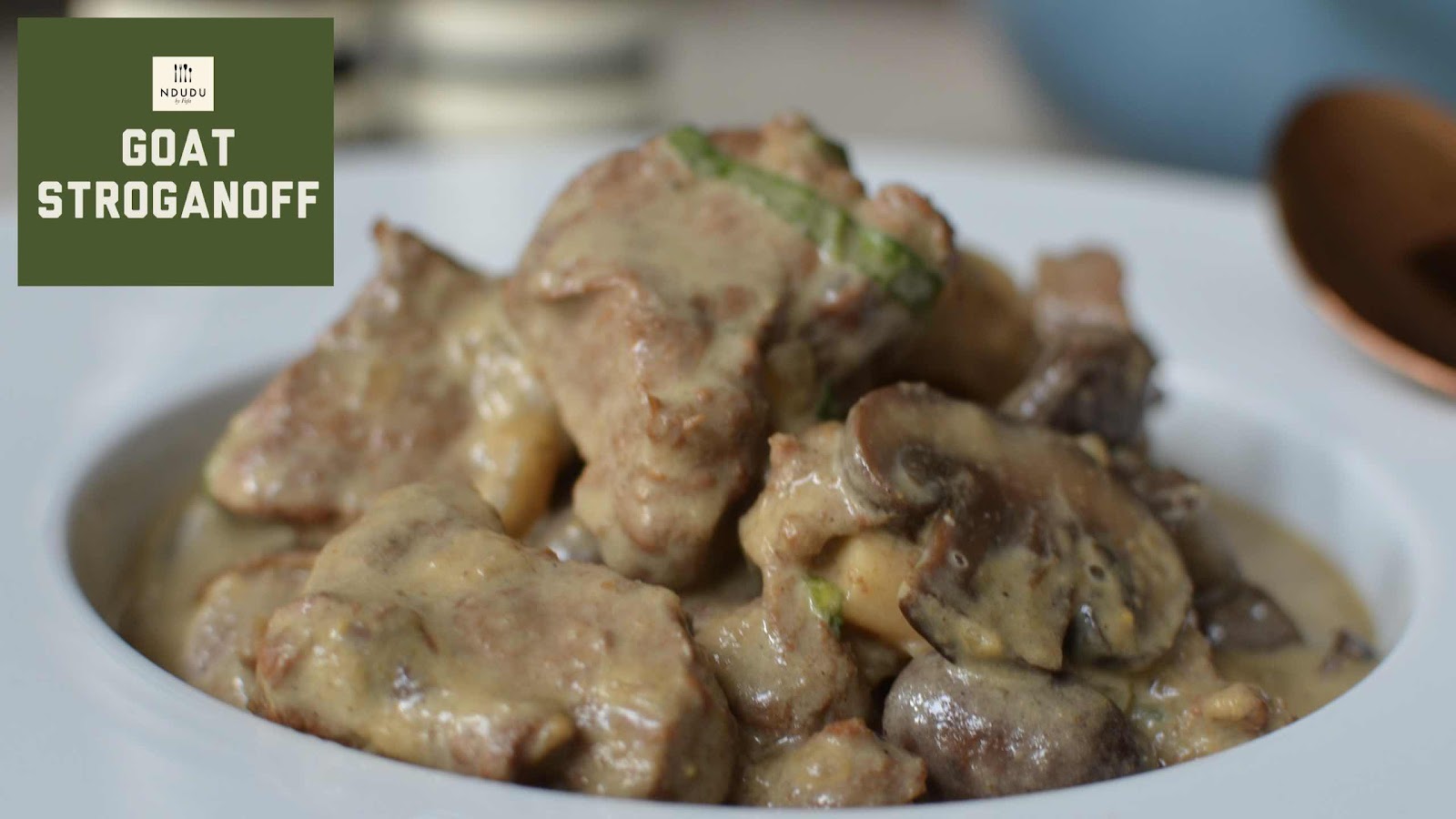
GOAT MEAT STROGANOFF


What about this creative and equally Russian inspired recipe for lunch or dinner, using everyday ingredients?


1kg of Goat Meat
80ml of double cream
2 tablespoonful of Sour Cream
1 large peeled and sliced Onion or Shallot
300g of Mushrooms (Shiitake, Chestnut etc)
250ml of water
1 teaspoonful of Corn flour or Plain flour (mix with 4 tablespoonful of water)
80g of chopped Spinach
1 teaspoonful of  English or French mustard
1 tablespoonful of Worcestershire sauce (Lea Perrins) or Dark Soy Sauce
Salt and Pepper to taste

SPICE MIX
1 teaspoonful of Aniseed
30g of fresh Ginger
1 large Onion
Garlic

Watch how to make this creative dish below; 


Don't forget to subscribe, try the recipe, leave comments with your feedback and share the video. All photos, recipes and videos are by the owner of this blog. 

Saturday, 23 March 2019

HOW TO COOK RICE PERFECTLY WITH LEAVES


Thaumatococcus Daniellii leaves (Waakye leaves/ Ewe Eran as known in Nigeria) are used for wrapping food across West Africa. 


In Ghana it is used in serving Red Red(a popular Vegetarian dish made with Plantain and Beans), Rice, Waakye (made by cooking Black Eyed Beans and Rice together)etc and in Nigeria it is used in preparing Moin Moin (a spicy steamed Black Eyed Bean cake).

 In recent times the use of the leaves in Ghana has declined due to the unhygienic ways they are kept by most street vendors. 


The leaves are usually wiped with an unclean towel which forced most customers to opt for the plastic bag which has subsequently polluted the environment. This was rather unfortunate considering the leaves are biodegradable,offer a distinctive flavour to any dish 

  and are recyclable. 


The leaves should be a clear choice as a the food wrapper and a campaign on how to keep it clean will encourage its patronage. 


 The leaves are so versatile and one could bake, grill and steam their meals in. I have a few recipes available and upcoming on how to use the leaves on my YouTube channel, ‘Ndudu by Fafa’.

 Please subscribe and click the notification button below 


If most street food vendors are trained on how to keep the leaves clean, then customers confidence in requesting for the leaves as food wrappers will grow. 


Tips:


Rinsing each leaf in salty water helps eradicate most bacteria.


Place leaves in an airtight container after washing to serve the general public.


You can refrigerate the leaves to keep its freshness for longer.


You can also dry the leaves and revive them later when you need it. 


Use food gloves when serving food 


Try recycling the leaves after use.


The leaves hold a distinctive flavour that permeates through any hot dish served in it.

The oils of the leaves  have a woody lemongrass taste that works perfectly with Jasmine rice or any Rice.


Ingredients 
1 cup of Jasmine Rice 
1.5 cups of Water 
1 tablespoonful of Coconut oil
Half a teaspoon of Salt 
2 broad Thaumatococcus Daniellii / Banana leaves (readily available in most African grocers across the UK). Try Brixton or Shepherds Bush market in London.


METHOD 
Watch how to prepare Rice perfectly each time and infusing the natural oils of the Thaumatococcus Daniellii leaves into the Rice below;


Don’t forget to subscribe, try the recipe and share. All photos, recipes and videos are by the owner of this blog.

Tuesday, 26 February 2019

SEAFOOD and WELE or PONMO OKRO SOUP RECIPE (GHANA*NIGERIA)


‘Wele’, ‘Ponmo’ are basically words used to describe Cow hide in Ghana and Nigeria respectively.
Cow hide is a delicacy that’s enjoyed in both Ghana and Nigeria.


It’s an inexpensive ‘Meat’ with little nutritional contents (Protein & Collagen) depending on how it’s manufactured. 
Cow hide manufactured in a hygienic way has little protein and it’s packed with Collagen which helps against aging of the skin.
 When added to stews, soup and cooked in spices is does taste good.

 The unhygienic way that most producers use in making the Cow hide for consumption contributed to my Mum not including it our diet.
 It’s difficult to establish if the Cow hide you purchase from the market place is wood smoked and not smoked with used tyres and petrochemicals.
 It’s about time a seal of authenticity is introduced by the various governing Food Standard Boards to ensure they’re only wood smoked.


I learnt how to cook from my Mum, hence the absence of the Cow hide in our diet stayed with me till my adulthood. I can count on one hand the number of times I’ve enjoyed this delicacy, hence I was excited when a cousin gifted me a portion.

The natural Cow hide is dark brown in colour (due to burning of the hairs), has to be scraped and cleaned before cooking. 
The cooking process can take up to 3 hrs to soften the skin, hence its best to use a pressure cooker.

The Cow hide I was gifted had a cream looking colour, which meant it was scalded , shaved and par boiled. 


This meant the Cow hide had no unwanted chemicals and was cooked within an hour and a half instead of 3 or more hours with the wood smoked or tyre burnt types.

It’s imperative to source the Cow hide that has either been wood burnt or the cream looking types. 

With this in mind I proceeded to include this delicacy to my Okro soup recipe which included, Prawns, Tilapia, Salmon, Mackerel and Spinach for their flavour and nutritional content.

Tip
Use whatever fish or seafood that’s available to you. I used up most of my leftover Fish for this dish.

INGREDIENTS 

COW HIDE
300g of Cow hide cut into sizeable chunks 
1 Habanero Chilli
1 large Clove of Garlic
2 litres of water

OKRO SOUP
300g of smoked Mackerel 
300g of wood smoked Salmon
200g of fried Tilapia 
150g of fried Prawns
500g of baby Spinach or Cocoyam leaves
700g of chopped fresh Okra
4 tablespoonfuls of Palm oil or Zomi
1 Habanero chilli
1 large chopped Onion
1 levelled tablespoon of Bicarbonate soda 
350ml of water or your preferred stock 
Salt to taste

RAW PEPPER 
2 medium sized Tomatoes 
1 medium sized Onion
1 Habanero Chilli
1 clove of Garlic
10g of fresh Ginger 

SPICE MIX
30g of Ginger
1 medium sized Onion 
1 clove of Garlic
1 tablespoonful of Aniseed

METHOD 
Watch how to prepare this flavour packed soup including the use of Cow hide (Wele,Ponmo)below;


Don’t forget to subscribe, try the recipe and leave comments with your feedback.
All photos, recipes and videos are by the owner of this blog.


Saturday, 8 December 2018

HOW TO MAKE COUSCOUS FROM SCRATCH

The time on the clock was 05:30hrs as I sipped my black coffee and started researching about Millet Couscous. The constant request for Brukina (a Ghanaian drink made from Millet and Milk) by my subscribers inspired my early rise.


The outcome of my research meant one had to use CousCous Millet and  not the Millet in its natural form. I could place an order for the Millet Couscous however that will delay my filming for another week.

I had all the ingredients needed to make my own Millet Couscous apart from the Muslin cloth needed for steaming.


During my childhood Mum made a dish known as ‘Korklui’ where the fermented Corn dough was turned into granules using a flat wooden sieve known as ‘Agbadze’ and boiled into a porridge.


I knew  Agbadze (as known in the Ewe language) was  used in Ghana and Togo, however I was curious to know if any other country also used it and it’s local name. My question read…

‘Good morning folks. What would you call this in your local language and in English? 😜 Do you use this in your country? Tell me more.

*Responses*

Elibri

*I guess it can be called Sranui*. ‘Ewe language from the Ho area of Ghana’ as explained by Amadebrah

Qwesi_gentry

*We call it Agbaedzea in Angola and we use it for sieving’

Freda Muyambo (CEO of Tarts & Crumble based in Nigeria).

**Used for winnowing? I guess it is called a winnower or winnow’**

Lyon

**Used by the Ga people for the preparation of Kpokpoi**

Chayilediyie

*It’s called Ukeng in my dialect (Akwa Ibom State in Nigeria)**

Thank you folks for your contribution to my research. In the name of sticking to the recipe for the Millet Couscous  find the list of ingredients below;

680g of Millet flour

227g of Rice flour

200ml of cold water


Jollof

250g of Jollof stew

340g of Millet Couscous

METHOD

Watch how to make your own Gluten free Couscous below;


Don’t forget to subscribe, try the recipe, leave comments with your feedback and share 😘