Tuesday, 21 March 2017

BIRYANI RICE RECIPE


Biryani is a mixed rice dish from India, made with a spicy sauce and either with Chicken, Mutton or vegetables. The dish looks similar to Jollof rice, however it's different in its cooking method and taste.


SPICE BLEND
The number of spices used for Biryani is exhaustive, however it's worth every spice. There are spice blends that include chunky dried Prunes ,however the base of the spice mix including black & Green Cardamom, Bay leaves, Chilli powder, Turmeric and more are present in most spice blends. 
Biryani gets its distinctive taste from the spice blend used.
I used a pre blended Biryani spice mix for my first recipe, (which I purchased from an Asian shop), however I decided to make my own blend for this recipe. 

BIRYANI SPICE BLEND

Biryani can be time consuming, however this recipe shows you how to cut the cooking time in half.
I'll update my blog with the Biryani spice blend soon, in the meantime you can purchase the spice blend in most Indian shops.


For this recipe I opted for Fish (Sea Bream)as it's what I had available. Personally, I think that was the best decision I made. I tossed the fish in flour and fried in oil till crispy.  

I served the Biryani with a tangy baby Spinach and Red Onion salad, which paired perfectly well. 
To make the Salad;
 Place your washed Spinach in a bowl, add finely chopped Red Onions and diced Avocado. 

Salad Dressing 
For the dressing add 1 tablespoonful of White Wine Vinegar,3 tablespoonful of Olive oil, a pinch of salt and pepper to taste. 

You can serve your Biryani with Raita or something sour.
In perfecting the recipe, I noticed it's easy for one to add too much spice (which can overpower the dish). The addition of Yoghurt helps to curb the overpowering spice flavour.

Keep an eye on the rice when par boiling (to prevent it from over cooking). Mushy rice Biryani is a big 'No no'.

No sooner had I put a picture up on my Instagram page, did a few comments suggest it was Jollof rice and me refuting their suggestions. 

When making Jollof rice, the rice is cooked in a rich tomato sauce until tender. 
Biryani includes using both Tomato stew and its special spice blend.  The rice is par boiled separately (not cooked)and then layered with the sauce, dough is used to seal the pot (to trap in the steam) and steamed till its tender. 

In a previous post I emphasised the importance of making enough Tomatoes stew and freezing the rest. This came in handy and cut my cooking time in half when making this Biryani.
Find the recipe by clicking 'Tomato Stew'.

 
BIRYANI SPICE BLEND


If you choose to use Mutton for this recipe, marinate the Mutton with the Biryani spice blend for a minimum of an hour (best results try marinating it overnight). 

Once marinated, place it in a saucepan, add water and steam it till its tender. Once cooked, add the Tomato stew and follow the rest of the recipe. 

Vegetarian 
You can add butter beans, grilled Courgettes or grilled cauliflower. Alternatively use your preferred Vegetables.

If you're using Saffron , soak it in 20ml of hot water and set aside. 

Once my Biryani was cooked , I added the Yoghurt to the Biryani rice and mixed well, before serving (this gave the dish a lovely tangy taste).
 You can use the Yoghurt to make a Raita to serve with your Biryani.

When the Biryani was ready I couldn't help but quickly serve myself a portion and literally scoffed it down (I was hungry). 

Enough of my chit chat, let's get cooking.


For the list of Ingredients, you'll need;

350g of Basmati rice
I litre of hot water
300g of Tomato stew
3 tablespoonfuls of Biryani spice blend
2 tablespoonful of Ghee which is optional 
3 tablespoonful of natural Yoghurt 
20g of chopped Coriander 
Saffron (optional)
Salt to taste


Method 
Pour the water and Basmati rice into a saucepan and place on a high heat. 

Once the water comes to a boil , drain the water from the rice  using a colander and set aside.(This should take about 6 minutes).

Tip
Please note the rice still cooks in its steam, even when drained off water.

In a saucepan or Clay pot warm your Tomato stew on a medium heat.
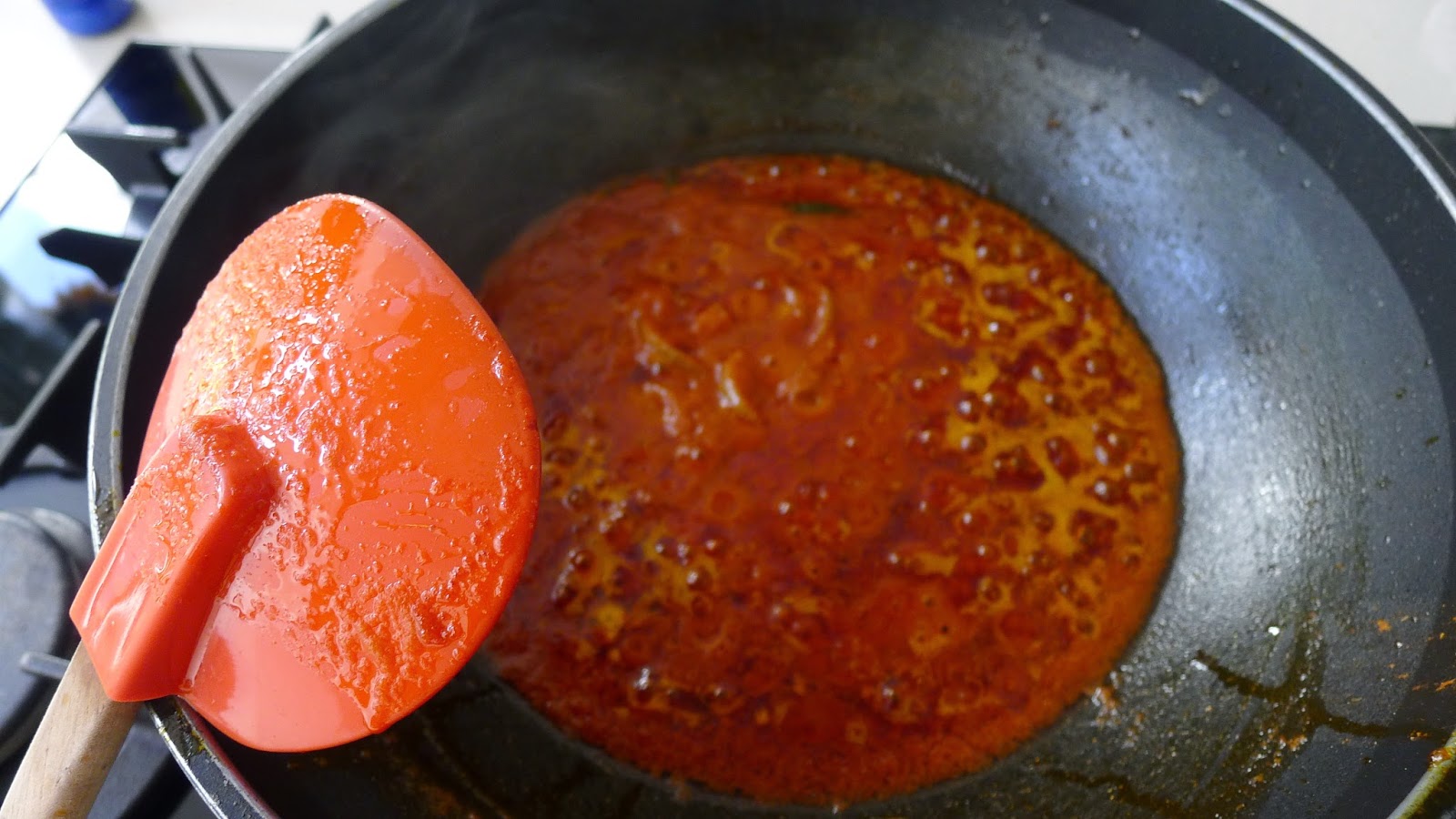
Add the Biryani spice blend and cook for 5 minutes.

 Ensure you stir the mixture to prevent it from burning.
At this stage add the Yoghurt to the sauce, decrease the heat to its lowest settings and stir.

Add the par-boiled rice to the spiced Tomato mixture and spread evenly over the top, as shown above. Don't be tempted to stir at this stage.


At this stage, evenly pour the Saffron juice over the rice.
Seal the rice with Kitchen foil and cover the saucepan with its lid. (This is to trap the steam to cook the rice perfectly). Traditionally dough is used to seal the edges of the pot to trap the steam.

As the rice is par boiled, you need to cook it for about 5 minutes and take it off the heat. 
(The residual heat still cooks the rice). Leave the rice to rest for about 5 minutes and serve.

I prefer to mix everything together in my pot when cooked, before I serve, for an even distribution of flavours.


Serve your Biryani rice, sprinkle it with chopped fresh Coriander and serve with either Raita, Chutney or your preferred salad.

All photos and recipes are by the owner of this blog.

Find more inspiring recipes like this Party Jollof rice on my YouTube channel, 'Ndudu by Fafa' and don't forget to subscribe.


Monday, 20 March 2017

SPINACH & MELON SEEDS (EGUSI)

'Kontomire'(Cocoyam leaves)and Egusi (Melon seeds) stew are staples in most Ghanaian homes and can be made with meat, shellfish and fish. It's best served with boiled Yam, Cocoyam, Plantain, Cassava or steamed rice. I've substituted the Cocoyam leaves for Spinach. 


Ingredients:
Serves 8
2 bags of Spinach (2 bundles of Cocoyam leaves, washed and chopped roughly)
1 large onion cut lengthways
1 Habenero pepper /10 Kpakpo shito (Popular Ghanaian chillies)
4 large diced tomatoes
2 tablespoons of Palm oil
2 large size smoked Mackerel (remove the skin, bones, head and discard)
2 perfectly ripened oily Avocado cut into chunks.
1 teaspoon of grated ginger.
2 litres of water
Half a teaspoon of salt.
125g of ground Egusi (Melon seeds)


Method: 
Place a saucepan on a medium heat and add the Palm oil
Once the oil melts, add the onion and fry gently for about 1 minute. 
Then add the chillies and fry for a further minute. 
Add the ginger and fry for 30 sec
Add the tomatoes and cook for a further 5 minutes (stir the sauce to prevent it from burning).


Then add the Mackerel to the sauce and cook for a further 3 minutes. 


In a separate bowl add 200ml of water to the Egusi (Melon Seeds) and mix till you have a double cream consistency. 


At this stage reduce the temperate to a low heat and add the Egusi sauce. 


Cover this  and allow the sauce to steam the Egusi for about 5 minutes. 
Take care in stirring the sauce as you don't want to break the Mackerel into tiny pieces. 


On a high heat boil the Cocoyam leaves for about 8 minutes or if you're using Spinach leaves, just blanch them for 30 seconds.

To blanch spinach;

Bring water to a boil in a saucepan. 
Take the saucepan off the heat and add the washed spinach. 
Mix it thoroughly for 30 seconds (till the spinach wilts).

Drain the spinach into a colander and run it under cold water, (this stops the spinach from cooking further and maintains it's green colour).

Make sure you squeeze any excess water out of the Spinach. 

Using an earthen ware pot or a food processor add the spinach, some chillies from the sauce (if using Kpakpo Shinto) and blend/grind to a smooth paste.


The traditional earthen ware clay mortar with it's wooden pestle.

Add the Spinach to the sauce and mix together evenly, still taking care not to break the Mackerel into pieces. 
Cook for a further 2 minutes and turn off the heat.


Serve with either boiled Yam,Cocoyam, Plantain, Cassava or steamed rice and Avocado. 


Best with homemade pineapple and ginger juice. Enjoy! All photos and recipes are by the owner of this blog. 

Find more inspiring recipes on my YouTube channel, 'Ndudu by Fafa'. Don't forget to subscribe and share.


Sunday, 19 March 2017

GARI PIÑON RECIPE

'Gari Piñon', is basically Gari cooked in a hot stock and mixed with a spicy Tomato stew. This is a popular dish in both Togo and Benin, in West Africa. It was an absolute favourite in my household (thanks to Mum).
Traditionally Meat, Tomatoes, Onions , Stock cube and  Pepper are used in its preparation.


I decided to make this quick dish whilst   planting my new herbs in my garden (I'll talk about the herbs another time). 
If you follow me on Instagram you'ld have seen a video of me making this dish. 


Gari is to a West African as Couscous is to a Nothern African. Gari is made from fermented grated Cassava, which is then fried till dry. Gari is used in many ways  across West Africa including 'Gari Soakings', Gari Fortor' 'Eba' a perfect addittion to Red Red to mention but a few. 

I've adapted the recipe to my preference by using Fish, however you can use your preferred meat and it's stock in making the traditional version. If you're using meat you need to cook it till it's tender (best to use the tougher cuts of meat for this recipe).


It's imperative to use Tomato stew that was prepared over 24hrs ago. I find the flavours of the stew infuse better, a day after cooking. Try it! Try my Tomato stew recipe...

This is a cost effective and quick dish to make. Let's start cooking...


Ingredients 
200g of Gari
2 large chopped Red Onions
450g of Tomato stew
400g of grilled and flaked Sea bream/ Tilapia/ Red Snapper /Wild Seabass
200ml of Fish stock
20g of chopped Coriander 
Salt to taste


Method
Warm up 350g of the Tomato stew in a saucepan and add the chopped Onions and flaked Fish. 
Fry gently for 5 minutes and add the Gari.

Mix everything together till well combined. Add the fish stock and salt.
Continue to stir till well combined.
Cook gently for 5 minutes until you have a soft and pliable texture.
Take the Gari Piñon off the heat,  add the chopped Coriander and stir till well combined. 

Serve immediately with steamed Vegetables and the remaining stew.


Enjoy!

All photos and recipes are by the owner of this blog. 
Find more inspiring recipes on my Youtube channel 'Ndudu by Fafa'.


PERFECT GHANAIAN TOMATO STEW


Tomato stew is to a Ghanaian, what Passata is to an Italian. The Ghana Tomato stew recipe calls for the use of both fresh Tomatoes, Tomato purée and spices. The mixture is cooked and fried in oil, till the oil separates from the Tomatoes.

The oil used mostly for this sauce is Sunflower oil. I've opted to use Groundnut oil for this recipe, however use whatever oil you can afford.
The sauce needs to fry dry, hence it calls for using more oil than usual. Once the stew is cooked, drain the excess oil off and use it other recipes. It's perfect for frying an Omelette (as it's spiced oil).


This classic sauce accompanies various dishes including boiled Yam, Kenkey, Banku, Waakye, Rice to mention but a few.
It's also the base for making the best Ghanaian Jollof rice, Gari Piñon, Gari Fortor, Spaghetti Egg or Cabbage stew etc.


In this recipe I've used Shallots instead of normal Onions, as they lend a sweeter taste to the stew. The Shallots from Ghana are much smaller, sweeter and  they lend this stew its distinctive flavour. They're fiddly to peel, however they're worth the addition.

Most people add stock cubes to their Tomatoes stew, however I omitted it from this recipe and used Aniseed (Sukoni) instead. If you're using stock cubes, this recipe works perfectly with the Shrimp cube. 


The best chilli to use for this sauce is locally known as 'Kpakpo shito'(Pettie Belle). The chilli adds a perfumery and distinct taste to the stew. It's not as hot as Habanero chillies. In the absence of the Pettie Belle chilli, I've used Habanero for this recipe. Adjust the chilli quantity to your taste preference. 


You can use any type of fresh Tomatoes you prefer, however I prefer to use Plum Tomatoes.
 Plum Tomatoes have less water content and allows for a quicker cooking time. 
The best Tomatoes are the sun ripened types, which are readily available in Ghana. You can use Tin Tomatoes if you don't have access to fresh Tomatoes for this recipe. 

This recipe requires extended cooking times for each addition, till the oil separates. It's imperative this method is followed for the perfect stew. The slow cooking of the Onion and Ginger mix, intensifies its flavours, which in turn infuses the Tomato purée.

 The sweetness of the Onions will take away any metallic taste (that Tomato purée in a tin) usually has, away from the stew. 
Please ensure you cook on a medium heat at all times and keep stirring to prevent the stew from burning. 

Tip

When using Tomato purée, mix it with a little water and fry till it separates from the oil.


I find the stew is more flavoursome after 24hrs.  This allows the flavours to infuse naturally.
 You can change the flavour of the stew by adding fresh herbs like Oregano, Marjoram, Coriander, Parsley etc

Preparing and making this Tomato stew is time consuming and can be a messy affair.
 It's best to double or triple the recipe measurements when making the Tomato stew to save you from the repeated hassle. 
 Once cooked, portion it into individual containers and freeze till when a recipe requires it.


Ingredients 
700g of fresh Plum tomatoes
150g of Tomato purée 
1 Habanero chilli or 10 Kpakpo Shito
1 tablespoonful of Aniseed (Sukoni)
30g of peeled and chopped Ginger
3 cloves of Garlic 
4 large roughly chopped Shallots or 2 large Onions
30ml of Groundnut or Rapeseed oil
Half a teaspoon of ground Mace or Nutmeg 
Half a teaspoon of mixed spice
3 bay leaves (optional)
2 shrimp stock cube (optional).
Salt to taste 


Method 
Place your saucepan on a medium heat and add your preferred oil.

Add the Ginger, Shallots, Aniseed, Garlic and Chilli to a blender. Blend till you have a silky smooth consistency.

Add the blended Ginger mix to the oil and fry gently for 10 minutes or until you have a thick consistency and the oil separates from the mixture.

Mix 150ml of water to the Tomato purée and add to the Ginger mixture.

Fry the Tomato purée till the oil separates from the mixture. Ensure to stir to prevent the bottom of the pan from catching. This should take about 10-12 minutes.

Add the blended Plum tomatoes and fry gently for 25 - 30 minutes. Ensure you stir to prevent the bottom from catching.

Cook the stew till the oil separates. Ensure you cover the saucepan with its lid (to prevent the stew spitting all over your Kitchen surfaces).
Add the Nutmeg, Bay leaves, mixed spice and cook for 2 minutes.

Add salt to taste and cook for another 2 minutes. 
Leave the stew to cool down completely and transfer it into a sealed bowl.


Leave the stew in the fridge at least for 24hrs. This will allow all the flavours to infuse for a tastier stew. 

This stew can be used as a base for most dishes. Freeze the stew for no longer than a month. Use when a recipe requires a spicy Tomato sauce. 


Tomato stew sprinkled with fresh Lemon Thyme for a refreshing flavour.

All photos and recipes are by the owner of this blog.

Find more inspiring recipes, like this party Jolof rice on my YouTube channel 'Ndudu by Fafa'. 

Don't forget to subscribe and share. 


Saturday, 18 March 2017

CRISPY PRAWN RECIPE


Enjoy this easy to make fried crispy Prawn in Panko breadcrumbs. You can use any breadcrumbs for this recipe, however to get a crunchy, light coating its best to use the Japanese Panko breadcrumbs. 


Ingredients; 
Serves 4
12 large peeled and deveined Prawns with their tails intact
1 large egg
1 cup of Panko breadcrumbs, available in most supermarkets.
A bag of washed mixed green salad
Sweet chilli sauce / Yellow Bajan chilli sauce ( available in most supermarkets or exotic food grocers)

Method;
Place a saucepan with the oil on a medium heat. 
Test the oil is hot by adding a tiny pinch of breadcrumbs. If it sizzles your oil is ready. 


Crack the egg in s bowl and whisk till well combined
Add your breadcrumbs and prawns in individual bowls as above. 
Take a prawn, dip it in the whisked egg and then into the breadcrumbs. Coat the prawns with breadcrumbs evenly and dip it carefully into your hot oil. Fry for about a minute and place on a kitchen towel to soak up any excess oil. 
Repeat the above process till you've fried all the prawns. 
Serve with your favourite green salad and drizzle with sweet chilli sauce or a spicy yellow Bajan chilli sauce. 


Enjoy with a chilled glass of beer. 
All photos are by the owner of this blog.